AI Art Checker: How to Tell If Digital Art Was Made by AI
 Sana Bano
·August 10, 2026
·8 min read
Sana Bano
·August 10, 2026
·8 min read
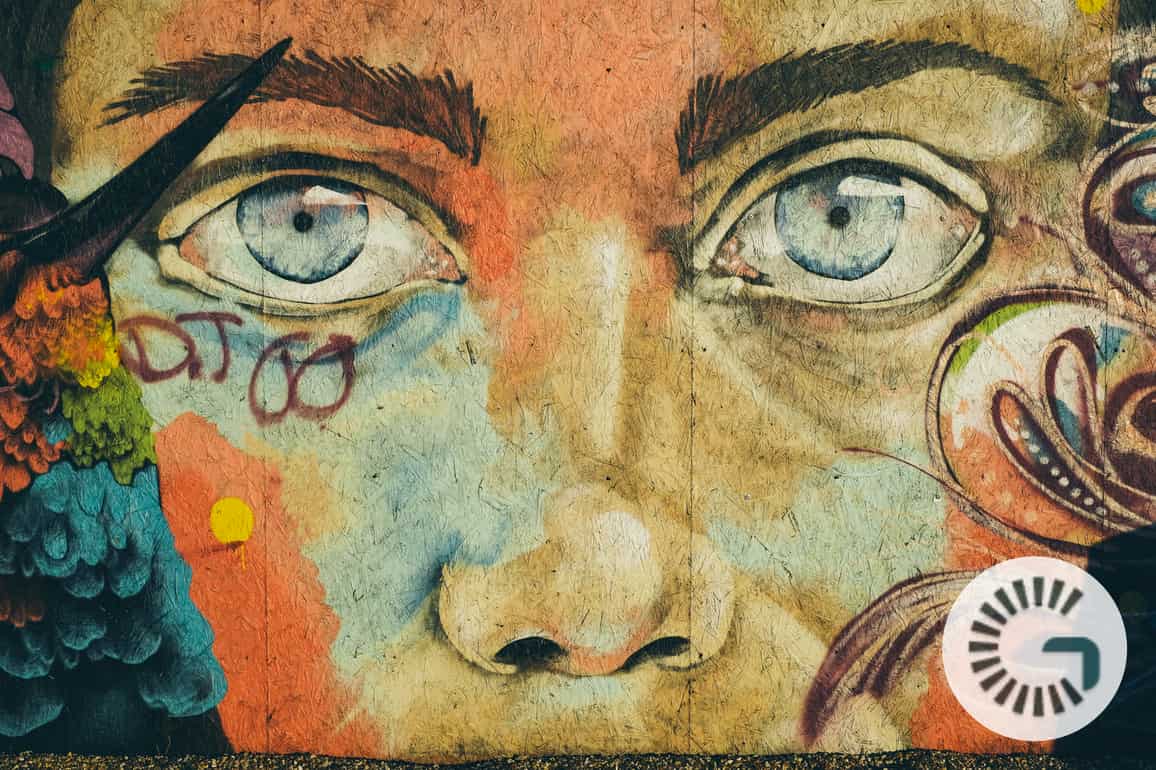
An AI art checker tells you if digital art was AI-generated. Upload the image to GPTOne for a confidence score and a heatmap showing which regions drove it.
To check whether a piece of digital art was made by AI, upload it to GPTOne's AI art checker for a confidence score and a heatmap showing which regions look generated. AI art from tools like Midjourney and DALL-E is now good enough to win contests and sell as prints, which makes an art checker useful for buyers, artists, and competition judges. It is free to try, and works in seconds. Here is how to tell AI art from human art and how to verify it.
Key Takeaways
- An AI art checker analyzes an image for generation patterns and returns a confidence score, plus a heatmap of AI regions.
- AI art often fails on hands, fine text, symmetry, and backgrounds that fall apart on a close look.
- Style alone is unreliable now, so pair your eye with a detector rather than guessing.
- Buyers, artists, and contest judges all use art checkers to protect fairness and value.
- No checker is perfect, so treat the result as a strong signal and confirm the important cases.
Why AI art is hard to spot by eye
A few years ago, AI art looked obviously artificial. Not anymore. Tools like Midjourney produce painterly, detailed, striking images that pass as human work at a glance, and they keep improving. Contests have handed prizes to AI entries before anyone realized, and marketplaces are full of AI prints sold as handmade.
So style is no longer a reliable tell. A gorgeous, cohesive piece can still be AI, and a rough, quirky piece can still be human. That is why guessing from vibe fails, and why a checker that reads the pixels matters.
The visual tells of AI art
Even good AI art tends to slip on the details. Look closely for these:
- Hands and fingers that are malformed, merged, or wrong in number.
- Text in the artwork, like a signature or a sign, that turns into fake letters.
- Symmetry that is too perfect, or patterns that repeat unnaturally.
- Fine details that dissolve on zoom, especially in backgrounds, jewelry, and hair.
- Anatomy or physics that does not quite work, like a limb that connects oddly.
One tell is weak on its own. Two or three together, plus a high detector score, is a strong case. The full cross-generator checklist is in how to tell if an image is AI-generated.
How to check a piece of art
- Get the highest-resolution version of the image you can.
- Open GPTOne's free AI image detector.
- Upload the file and read the confidence score.
- Turn on the heatmap to see which regions carry generation artifacts.
- Confirm anything high-stakes, like a contest entry or a purchase, with provenance or the source file.
Because AI art is often fully generated rather than partially edited, the whole image tends to light up rather than one region, which is itself a useful signal.
Who needs an AI art checker
Three groups use these tools most. Buyers and collectors, who want to know if a print or a commission is genuinely handmade before they pay a premium. Artists, who want to prove their own work is human or check whether a competitor copied their style with AI. And contest or gallery judges, who need to enforce rules about AI entries fairly.
For all three, the tool does the same thing: turns a gut feeling into evidence. A confident human artist can also use it to defend their own work if it is ever wrongly accused, which matters as detectors are not perfect.
Style is not proof, and neither is one scan
Two honest cautions. First, do not convict a human artist on style alone. Skilled digital painters produce clean, polished work that can superficially resemble AI, and accusing a real artist is a serious harm. Second, do not treat a single detector score as final proof either.
The right approach is layered. Read the confidence score, study the heatmap, look at the visual tells, and consider the context, like whether the artist can show process files or work-in-progress shots. On text, GPTOne is a 99.99% accurate detector, but images behave differently, so for art we report a confidence score and a heatmap rather than a single blanket number. We explain why in do AI image detectors actually work.
Provenance and process evidence
Two kinds of proof beat any scan when you can get them. Signed provenance data, like C2PA Content Credentials, can record that an image came from an AI tool, and Google SynthID watermarks some AI images invisibly. When these survive, they are strong evidence.
Process evidence is the human equivalent. A real artist can usually show layered source files, sketches, or timelapse recordings. An AI piece cannot. We ran a structured 60-image benchmark to test detection across categories, documented in our AI image detector benchmark, and the honest conclusion holds here: combine the scan, the provenance, and the process evidence rather than trusting any one alone.
The disclosure debate, briefly
AI art sits in a genuinely contested space, and a checker does not settle the ethics, only the facts. Some platforms and contests ban AI entries outright. Others allow them if disclosed. Many artists feel their styles were used to train these models without consent, while others use AI as one tool among many. A checker cannot resolve any of that. What it can do is answer the factual question underneath the argument: was this specific image generated by AI or not.
That factual answer is what most disputes actually turn on. A contest needs to know whether an entry broke its rules. A buyer needs to know whether a "handmade" print was generated. A marketplace needs to enforce its own disclosure policy. In each case the value is the same: replace a heated guess with evidence, then let the humans apply their own rules to that evidence.
Protecting human artists too
It is worth stressing the other side, because detectors cut both ways. A false accusation against a real artist is a serious harm, and clean, polished digital work can superficially resemble AI. So the tool is not just for catching AI art; it is also for defending human art. An artist wrongly accused can run their own piece through the checker, show a low AI score, and back it with process files.
That is the honest way to use an art checker: as evidence in both directions, never as an automatic verdict. Read the confidence score, study the heatmap, weigh the visual tells, and ask for process evidence before drawing a conclusion about anyone's work. The same free tool that flags AI art is also the one that helps a human artist prove their case, which is exactly how a fair check should work.
The wider point is that AI art is not going away, and neither is human art. Both will keep sharing the same galleries, marketplaces, and feeds. A reliable, free checker does not pick a side in that coexistence; it simply keeps the facts straight, so contests stay fair, buyers know what they are paying for, and artists keep the credit they earned. That is a modest goal, but an important one, and it is the one an honest art checker should aim for.
FAQ
How can I tell if digital art is AI-generated?
Upload it to a free AI art checker like GPTOne for a confidence score and a heatmap, then look for tells like malformed hands, fake text, and details that dissolve on zoom. Combine the scan with the visual signs.
Is there a free AI art checker?
Yes. GPTOne's image detector works as a free AI art checker with a free account. Upload a JPG, PNG, or WebP and get a result in seconds.
Can an art checker be wrong?
Yes. Heavy compression and skilled work can affect the result, and clean human art can superficially resemble AI. Treat the score as a strong signal, not proof, especially before accusing an artist.
Does it work on Midjourney and DALL-E art?
Yes. GPTOne is trained across DALL-E, Midjourney, Stable Diffusion, and more, so it flags art from all the major generators.
What proves a piece is human-made?
Process evidence like layered source files, sketches, or timelapse recordings is the strongest proof, alongside a clean detector scan and any surviving provenance data.
Try the free AI image detector at gptone.me.