Human AI: How to Humanize AI-Generated Text Without Losing Your Voice
 Sana Bano
·September 28, 2026
·15 min read

Human AI editing tips to make AI-assisted drafts clearer, accurate, and more like your own voice.
Key Takeaways
Humanizing AI text is less about disguising its source and more about making a draft clear, accurate, and genuinely yours. A thoughtful edit adds judgment that a rewrite alone cannot supply.
- Replace generic language with details that matter to your reader.
- Preserve the intended meaning while changing stiff or repetitive phrasing.
- Check facts and context instead of trusting a polished draft automatically.
- Use your own voice and firsthand knowledge where they add real value.
- Treat AI detector results as signals for review, not proof of authorship.
What humanizing AI text means
Humanizing AI text means revising a draft so it reads naturally, says something specific, and reflects your judgment. You are not trying to imitate a person in the abstract; you are making the writing useful for the person who will read it. That distinction matters because smooth sentences can still be vague or inaccurate.
How AI-generated writing can sound generic
AI-generated writing can feel generic when it relies on familiar phrases, makes broad claims, or gives every paragraph the same measured rhythm. The sentences may be grammatically sound, but they can lack the small choices that help readers understand why a point matters. Look for language that could fit almost any topic or audience, then ask what this particular reader needs to know.
A useful edit does more than remove repetition. It gives the paragraph a reason to exist: a clear point, a relevant detail, or a useful next step. If a sentence sounds polished but could be pasted into dozens of unrelated articles, make it more precise or cut it.
The difference between humanizing and paraphrasing
Paraphrasing changes how an idea is worded; humanizing also considers whether the idea belongs, whether it is well supported, and how it should sound for your audience. A sentence can be paraphrased several times and still be empty. Human editing gives you the chance to add context, remove padding, and make a claim more careful.
That does not mean you should rewrite every sentence from scratch. Keep lines that are already clear. Change what feels stiff, unsupported, or unlike you, and preserve the meaning unless you have a reason to revise it. A practical guide to humanizing AI content can help you think through accuracy and voice together.
Why your voice matters more than bypassing AI detectors
A detector score is not a writing goal. GPTOne provides an AI text detector that analyzes writing for signals of AI authorship and reports confidence estimates; those estimates are not definitive proof of who wrote a passage. Chasing a score can push you toward awkward word swaps instead of the more useful work of improving clarity and adding real insight.
Your voice gives readers a reason to trust the work: not because a sentence has a particular rhythm, but because the ideas are considered, relevant, and responsibly presented. Aim for writing you can stand behind, whether or not a detector classifies it in a particular way.
When to humanize AI-generated content
Not every AI-assisted sentence needs an overhaul. Humanize a draft when its tone feels distant, its ideas stay general, or it misses context your readers will expect. You may also need to revise it when the writing must meet a particular voice, standard, or disclosure policy.
Drafts that need a more natural tone
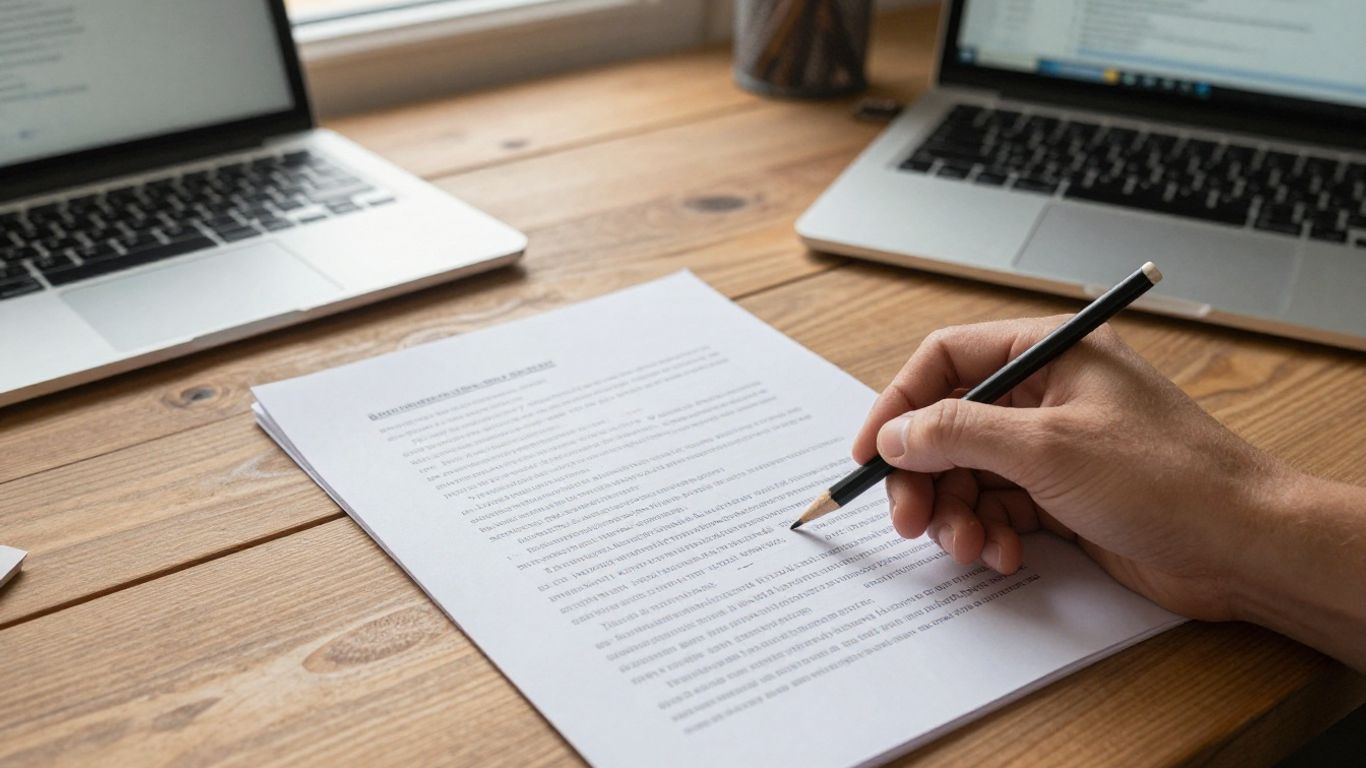
A draft may need a more natural tone when it sounds overly formal, repeats the same transitions, or explains simple points at unnecessary length. Read it as your audience would. If you find yourself skimming familiar phrases or struggling to see the main point, the draft probably needs a more direct opening and a clearer line of thought.
The right level of informality depends on the situation. A customer email, a research summary, and a personal essay should not all sound alike. Keep the purpose in view; a natural tone is not the same as a casual one.
Content that benefits from personal experience
Personal experience helps when it clarifies a process, illustrates a choice, or shows why a detail matters. Add it only when you can speak to it honestly. A short, concrete example from your own work is more valuable than a made-up anecdote inserted to make a draft seem more human.
If you are writing for a classroom, it can also help to consider a human-first classroom approach, where AI supports learning rather than replacing your own thinking. Whatever the setting, distinguish what you observed from what you inferred. That small distinction protects both your credibility and the reader’s understanding.
Situations where AI assistance should be disclosed
Whether you need to disclose AI assistance depends on the rules of the institution, publisher, employer, or client involved. Check the relevant policy before submitting or publishing, especially in academic, professional, or high-stakes settings. Editing the wording does not necessarily change the requirement to disclose how the draft was produced.
For students, a human-centered approach can keep the work accountable: use assistance only in ways your course permits, and make sure your submitted ideas and analysis are your own. The same principle applies at work. If a policy asks you to document AI use, do so plainly rather than treating a more natural-sounding draft as a substitute for disclosure.
How to humanize AI text step by step
A good revision starts with diagnosis, not a thesaurus. First decide what is not working, then change only what improves the meaning, tone, or usefulness of the piece. Read through the draft in passes so you can focus on one kind of problem at a time.
Identify stiff or repetitive phrasing
Read each paragraph and mark language that repeats, overexplains, or sounds formal without adding precision. Watch for repeated sentence openings, stock transitions, and strings of abstract nouns. When you spot one, ask whether the phrase carries a specific meaning or simply fills space.
A short review pass can keep the work focused. Look for these common patterns before you start rewriting:
- Repeated transitions that announce points without connecting them.
- Broad claims that do not name a situation, audience, or reason.
- Sentences that restate the previous sentence in slightly different words.
- Formal phrasing where a simpler expression would be clearer.
Use the marks as prompts, not automatic instructions to delete. A repeated term may be necessary for accuracy, and a formal phrase may suit your audience. Your aim is to remove friction while keeping the useful substance.
Add specific examples and relevant details
Specific details make a paragraph easier to understand because they show what an idea looks like in practice. Add a relevant example, condition, or explanation when it helps the reader use the information. Do not add figures, events, or personal stories unless you can support them.
Consider the difference between saying “check your sources” and explaining which claim needs support and what kind of source would establish it. The second version gives a reader something to do. Specificity should clarify the point, not decorate it with details that do not matter.
Rewrite sentences to match your natural voice
Once the ideas are sound, adjust the sentences to match how you communicate with this audience. You might shorten a sentence, use a familiar word, or make a cautious claim more direct. Do not force slang or contractions into writing where they feel out of place; natural voice comes from consistent choices, not a costume.
When a sentence needs a new shape, a small comparison can help you decide what to change:
| Draft habit | Revision question | Possible adjustment |
|---|---|---|
| Uniform sentence lengths | Does every sentence carry the same pace? | Combine or split ideas where it improves flow. |
| Abstract wording | Can you name a concrete action or detail? | Replace vague phrasing with a specific example. |
| Repeated transitions | Does the connection need to be stated? | Keep only transitions that clarify the logic. |
| Overly formal wording | Would you say this to your intended reader? | Choose a simpler expression if it stays precise. |
Use the table as a set of questions rather than a formula. Varying every sentence or swapping every formal word can make a draft feel just as artificial. Keep revisions that make the meaning clearer and the voice more consistent.
Check facts, context, and intended meaning
After editing for tone, compare the revised passage with the original purpose and any source material. Make sure you have not changed a qualification, removed an important exception, or made an uncertain idea sound settled. GPTOne’s AI text detector is designed to analyze signals of AI authorship; it does not establish whether a particular factual claim is true, so verify claims against appropriate sources separately.
This is also a good moment to confirm that the draft still answers the reader’s question. A clean sentence is not an improvement if it shifts the meaning. Keep a careful edit when it makes the point easier to follow without making it broader than your evidence allows.
How to preserve accuracy and originality
Natural-sounding prose can still be wrong, incomplete, or too close to another source. Treat accuracy and originality as part of the humanizing process, not a final coat of polish. The aim is to make the draft more useful while keeping its claims grounded and its ideas accountable.

Verify claims against reliable sources
Check factual statements against sources that are appropriate to the topic, and confirm that the source supports the wording you plan to use. Pay special attention to numbers, dates, quotations, names, and claims about cause and effect. If a source supports only a narrower point, do not stretch it to support a broader one.
Keep track of where important claims came from as you revise. GPTOne’s AI text detector analyzes writing for signals of AI authorship, while fact-checking requires consulting reliable evidence. Treating those tasks separately helps you avoid reading a confident tone as proof of accuracy.
Remove invented details and unsupported statements
AI-assisted drafts can include details that sound plausible but have no support in the material you provided. Check every example, attribution, statistic, and stated outcome before keeping it. If you cannot verify a detail, remove it or qualify the statement to reflect what you actually know.
Do not fill gaps with invented personal experience, either. It is better to say what the available information does and does not establish than to create a neat narrative. Readers can work with honest limits; unsupported certainty is harder to repair.
Use original insights instead of surface-level rewording
Originality comes from the thinking you contribute, not just from using different words. Ask what you learned from the material, what matters most to your reader, and what connection or implication is worth explaining. Then build the passage around that point and cite sources where appropriate.
A surface-level rewrite may change the vocabulary while keeping the same thin argument. Add value by explaining a consequence, making a useful distinction, or showing how a general idea applies to a real situation. If you cannot add a new insight, a concise and properly attributed explanation is better than a more elaborate imitation.
How to make AI writing sound more like you
Your voice is not a list of quirks to sprinkle into a draft. It comes through in what you choose to explain, how directly you make a point, and which details you think a reader needs. A few deliberate choices can make a draft feel more like yours without turning it into a performance.
Define your tone and audience
Before you revise, picture the person who will read the piece and decide what they need from it. A specialist may value precise terminology, while a general reader may need a brief explanation first. Your tone follows from that choice: clear, warm, formal, or conversational, as the context requires.
It helps to describe your goal in plain language. For example, you might want to sound concise but not abrupt, or knowledgeable without assuming too much. Keep that description nearby while editing so your choices work together instead of shifting from paragraph to paragraph.
Use your own vocabulary and sentence rhythms
Notice the words you use naturally and the way you tend to develop a point. You may prefer short openings and a longer explanation afterward, or you may build an idea through a few compact sentences. Use those habits when they help the reader, but let the subject determine the pace.
Do not add mistakes to simulate a person. Instead, choose familiar words, vary the structure when it feels right, and remove expressions you would not use. The result should sound like a considered version of you, not an imitation of someone else’s style.
Add firsthand knowledge where it genuinely helps
Firsthand knowledge is useful when it supplies context the reader cannot get from a generic explanation. It might show what a process involves, what a decision depends on, or where a common assumption falls short. Be specific about the limits of your experience, particularly when a reader might interpret one example as a general rule.
You do not need to make every paragraph personal. Sometimes the most authentic choice is to explain the evidence plainly and leave your own experience out. Include it when it adds clarity, perspective, or a detail you can responsibly stand behind.
How to review the final draft
The last review is a chance to check how the article works as a whole, not merely whether each sentence is polished. Read for meaning, flow, and consistency, then confirm that the piece meets the standards of the place where it will appear. A careful final pass can catch problems that sentence-level edits miss.
Read the text aloud for awkward wording
Reading aloud makes repeated rhythms and clumsy transitions easier to notice. You may hear a sentence that runs too long, a phrase that sounds unlike you, or a paragraph that is difficult to follow in one breath. Mark those places and revise only where the change improves clarity.
If reading aloud is not practical, slow down and read the draft in short sections. Do not mistake every pause for a problem; some sentences should be longer, especially when they explain a complex idea. Focus on places where the wording makes you work harder than the idea requires.
Check clarity, flow, and consistency
Look at the order of the ideas. Each paragraph should lead naturally to the next, and each section should make its purpose clear. Check that names, terms, tense, and point of view stay consistent throughout the piece.
You can also review whether the draft answers the question it set out to answer. GPTOne offers an AI text detector that provides transparent confidence scores and reports; those results are evidence signals, not a definitive judgment of authorship. If you use a detector, treat its output as one prompt for thoughtful review rather than a substitute for reading the draft.
Confirm the result meets your standards and publishing policies
Before you submit or publish, check the relevant rules for disclosure, attribution, privacy, and acceptable AI use. Requirements differ across classrooms, workplaces, publishers, and clients, so do not assume one policy applies everywhere. If disclosure is required, be clear about the assistance you used.
Finally, ask whether you would be comfortable explaining the claims and choices in the finished piece. If the answer is no, revisit the draft. A good revision is not just smoother; it is one you understand, can support, and are willing to stand behind.
Conclusion
Humanizing AI text is a matter of careful editing: clarify the point, add details you can support, and let your own judgment shape the final draft. When you review for accuracy, voice, and the rules of your setting, the result can read naturally without pretending that editing changes how the work was made.
Frequently Asked Questions
What does it mean to humanize AI text?
It means revising AI-assisted writing so it is clear, specific, accurate, and appropriate for its audience. The goal is useful communication, not simply a different set of words.
Does humanizing AI text change its meaning?
It can if you edit carelessly. Compare important revisions with the original point and sources, and make sure qualifications and context remain intact.
How can I make AI writing sound less generic?
Replace vague claims with relevant details, examples, or explanations you can support. Remove repeated phrases and keep the language that helps your reader understand the point.
Should I use a detector to review my writing?
A detector may provide signals that prompt further review, but its output is not definitive proof of authorship. Read the text yourself and consider the context, drafts, and applicable rules.
Is paraphrasing the same as humanizing?
No. Paraphrasing changes wording, while humanizing also considers accuracy, context, audience, and the value of the ideas. Rewording alone does not make a draft more thoughtful or original.
When should I disclose AI assistance?
Follow the policy of your school, employer, publisher, or client. If the rules require disclosure, editing the draft afterward does not remove that responsibility.
How do I keep my own voice in an AI-assisted draft?
Decide who you are writing for, use vocabulary and rhythms that feel natural to you, and add firsthand knowledge only when it genuinely helps. Keep the final claims within what you can support.