How to use a free AI checker to evaluate AI-generated text accurately
 Sana Bano
·September 17, 2026
·16 min read
Sana Bano
·September 17, 2026
·16 min read

Use a free ai checker wisely: understand scores, reduce false positives, and review text responsibly.
Key Takeaways
A free AI checker can help you review writing, but it cannot establish authorship on its own. Use detector results alongside context, drafts, editing history, and human judgment.
- Treat an AI score as a probability, not a verdict.
- Analyze complete passages rather than isolated sentences.
- Check privacy terms, word limits, and supported writing styles.
- Compare results carefully instead of chasing a zero score.
- Preserve drafts and disclose permitted AI assistance.
Understand what a free AI checker can and cannot do
A free AI checker looks for patterns associated with generated writing. It can help you identify passages that may deserve closer review, whether you are editing your own work or evaluating a submission. It cannot reliably reconstruct who wrote the text. For a broader explanation of responsible use, see this AI detection guide before treating any score as meaningful evidence.
What AI checkers analyze in written content
Most detectors examine features such as predictability, sentence structure, repetition, vocabulary patterns, and the consistency of a passage’s rhythm. Some systems compare the writing with patterns learned from human and AI-generated examples. These signals are about the text itself, not a hidden record of the writer’s process.
That distinction matters. A polished essay, a formal report, or a carefully edited second-language passage may share some traits with generated writing even when a person wrote every sentence. Detection is therefore a pattern assessment, not a plagiarism check and not a direct observation of authorship.
How detection scores are calculated
A detector typically combines several signals into an overall estimate. Depending on the tool, you may see a probability, confidence score, risk level, or percentage of text that appears AI-like. The labels differ, so you should read the tool’s explanation instead of assuming that a score has the same meaning everywhere.
A useful report usually gives you both a broad result and clues about where the result came from. Sentence-level highlights, section-level patterns, or an evidence breakdown can help you decide whether a passage sounds formulaic or simply follows the conventions of its genre.
Why results are estimates rather than proof
Even a high score does not prove that software wrote the passage. Models change, human writing varies, and editing can remove or introduce the patterns a detector notices. A low score is not proof of entirely human authorship either, especially when text has been paraphrased or lightly revised.
Context matters more than a single number. If a result could affect a grade, job, publication, or disciplinary decision, investigate the writing process and give the writer a chance to explain it. A detector should support review, not replace it.
Which types of text are hardest to classify
Short passages provide little evidence, so they can produce unstable results. Highly conventional writing can also be difficult to classify because academic, legal, technical, and business prose often uses predictable structures. Translated, paraphrased, mixed-authorship, and heavily edited text create additional uncertainty.
You should be especially cautious with a few sentences pulled from a much longer document. Their style may not represent the whole piece, and the missing context can make a modest signal look more significant than it is.
Choose the right free AI checker for your needs
Choosing a free AI checker is less about finding the biggest percentage and more about finding a tool that fits your text and your reason for checking it. Consider the models it covers, the amount of text it accepts, and the detail it gives you afterward. Privacy deserves equal attention, particularly when you are reviewing unpublished research, student work, or client material.

Supported AI models and writing styles
Start by asking whether the detector has been evaluated on the kinds of text and model outputs you actually expect to encounter. A tool may perform differently on conversational prose, essays, technical documentation, marketing copy, or translated writing. If you work across languages, check whether multilingual analysis is explicitly supported rather than assumed.
For a free option with broad model coverage, GPTOne is described as detecting text from eight or more AI models, including GPT, Claude, Gemini, Grok, and other systems. Treat that coverage as a reason to test the tool on representative samples, not as a guarantee that every result will be correct.
Word limits and usage restrictions
Free access often comes with limits that are easy to miss. A tool may restrict the number of words per scan, require an account, limit repeat checks, or reserve detailed reports for paid users. Read the interface and terms before splitting a document into many small fragments, since fragmentation can make analysis less useful.
Look for a practical balance between access and context. A tool that accepts a complete passage may be more helpful than one that gives a quick score for only a few sentences, even if both appear equally convenient at first.
Accuracy claims and independent testing
Accuracy claims need careful reading because they may depend on the dataset, language, document length, model version, and definition of a correct result. Ask whether the claim concerns false positives, false negatives, or both. Also look for information about testing conditions rather than relying on a prominent headline number.
A sensible comparison uses the same passage, the same formatting, and the same interpretation standard across tools. If two tools disagree, that disagreement is a signal to investigate the text and the methods, not permission to select whichever score confirms your first impression.
Privacy, data retention, and ownership policies
Before pasting sensitive writing, find out whether the service stores submissions, uses them for training, shares them with third parties, or lets you delete them. You should also check who retains rights to uploaded material. These details matter as much for a student’s draft as they do for confidential business copy.
If the policy is vague, use a non-sensitive sample or choose a service with clearer terms. Privacy is part of responsible verification, not an administrative detail to review after the scan.
Prepare your text for a more useful analysis
The quality of your input affects how useful the result will be. Clean, representative text gives a detector more consistent evidence than a title, a caption, or a few disconnected sentences. Preparation also helps you interpret differences between tools without confusing formatting artifacts with writing signals.
Remove formatting that can affect results
Copy the prose into a clean document when possible, removing navigation, footnotes, comments, tables, and unrelated labels. Preserve the actual wording, but avoid including headers or pasted interface text that is not part of the passage. If you are working from a PDF, copy the text carefully and check for broken line endings or missing characters.
Do not rewrite the passage merely to make it easier for the detector. The goal is to present the original writing in a readable form, not to manufacture a different sample.
Check complete passages instead of isolated sentences
A complete passage gives the detector more information about rhythm, vocabulary, transitions, and recurring structure. Very short samples can be especially unstable; guidance on word count and AI detection explains why length affects the reliability of the signal without making length a guarantee of accuracy.
When a document is long, divide it into meaningful sections such as an introduction, a body section, and a conclusion. Keep enough context in each sample for the result to describe a sustained writing pattern.
Separate human-written and AI-assisted sections
If you know that a draft contains both human-written and AI-assisted material, label those portions for your own review before scanning. A blended document can produce an average result that hides meaningful differences between sections. Keeping the boundaries visible also makes later revision and disclosure more straightforward.
You can create a simple working record with the passage, scan date, tool used, and result. That record does not prove authorship, but it prevents you from forgetting which version was evaluated.
Consider the text’s language and intended audience
A detector’s behavior can vary across languages and writing communities. Formal English written by a non-native speaker may be flagged because it is concise, regular, or grammatically controlled. A technical audience may also expect terminology and sentence patterns that look unusual in general-purpose training data.
Interpret the result in light of the text’s purpose. A press release, lab report, personal reflection, and discussion-board post should not be judged against the same stylistic expectations.
Use a free AI checker step by step
A careful scan is a small review process, not just a button press. You want a readable sample, a result you understand, and enough notes to explain what happened afterward. The following sequence keeps the tool in its proper role: a source of evidence for further review.
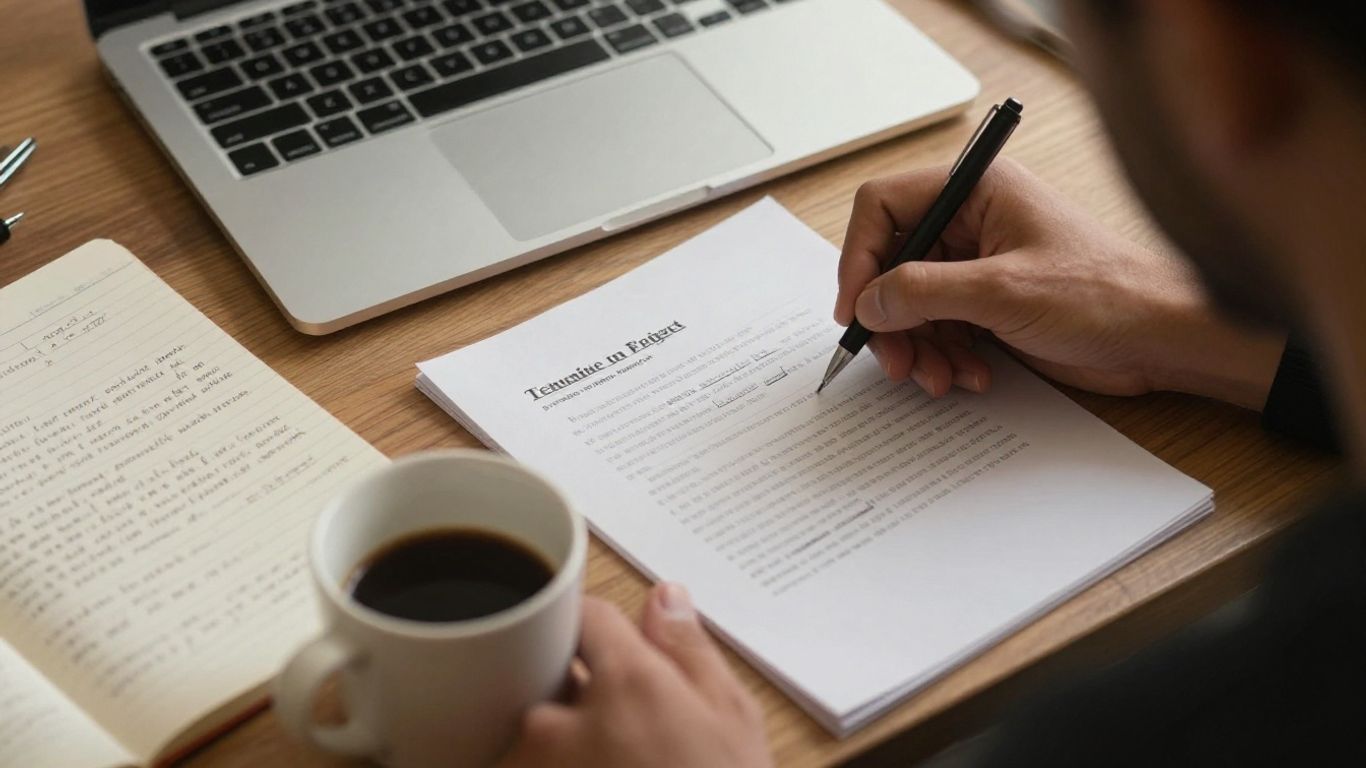
Paste or upload the text
Begin with the clean passage you prepared, and confirm that the tool accepted all of it. Check whether the interface silently truncated the sample or excluded certain sections. Save a copy of the exact text you submitted if the material is important.
If you use GPTOne, its documented workflow includes an overall AI probability score and highlighted passages for text analysis across several AI model families. Use those features to locate areas for review, while remembering that highlighted language still requires human interpretation.
Review the overall probability score
Read the score as an estimate of how strongly the passage matches patterns associated with AI-generated text. Do not translate it into a claim such as “this person used AI.” A probability can guide your next question, but it cannot answer every question about drafting, editing, or authorship.
Write down the score and the sample conditions if you plan to compare scans later. Without that information, a change in the result may reflect a different passage or formatting rather than a meaningful difference in the writing.
Examine sentence-level highlights
Highlights are often more useful than the headline score because they show where the detector found unusual regularity or predictability. Read each highlighted sentence in its paragraph, then ask whether the wording is generic, highly conventional, or appropriate for the subject. A highlighted sentence may be perfectly sound and still deserve no revision.
Avoid editing solely to remove highlights. Revise when the passage lacks a clear idea, a concrete example, or a credible voice—not simply because a tool marked it.
Compare results across multiple tools
If the stakes are high, run the same clean sample through more than one detector and record the conditions. Differences are common because tools use different datasets, models, thresholds, and definitions of AI-like writing. A comparison is most useful when it reveals a consistent passage-level concern rather than when it produces a preferred number.
Use the comparison to decide whether you need more evidence, such as drafts or a conversation with the writer. It should make your review more careful, not more confident than the underlying evidence allows.
Interpret AI detection results responsibly
The hardest part of detection is often not obtaining a score but deciding what the score means. You need to separate a technical signal from a conclusion about a person. That discipline protects writers and gives reviewers a more defensible process.
Distinguish likelihood from certainty
A detector can estimate whether text resembles examples associated with AI generation. It cannot observe the writer’s keyboard, recover every revision, or prove which tool produced a sentence. Even a strong signal should be described carefully: “the passage was flagged” is different from “the passage was generated by AI.”
This distinction is central to fair AI detector review, especially when the consequences of a mistaken judgment are serious. Use neutral language in notes and reports so that an estimate does not quietly become an accusation.
Investigate false positives in formal writing
Formal writing often relies on orderly structure, restrained vocabulary, and repeated terminology. Those features can resemble the regularity a detector associates with generated text. Non-native English writing may also be flagged when the writer has deliberately chosen clear, conventional phrasing.
Read the passage for meaning and development, not just style. Ask whether the examples, reasoning, citations, and revisions fit the writer’s known work before drawing a conclusion from a score.
Account for editing, paraphrasing, and translation
A person may draft an idea, translate it, edit it with software, or ask for help improving clarity. Each step can change the surface patterns without revealing who contributed the underlying reasoning. Conversely, paraphrasing may make generated text harder for a detector to identify.
Because the writing process can be mixed, record what is known and what remains uncertain. A score from the final version should not be treated as a complete history of how that version came to exist.
Combine detector results with authorship evidence
A responsible review uses multiple forms of evidence. Drafts, revision history, source notes, oral explanation, and consistency with earlier work can provide context that a text-only detector cannot. None of these items should be treated mechanically, but together they can support a fairer conversation.
A detection score can start a question, but it should not end the investigation.
After reviewing the broader evidence, you may decide that the result is inconclusive. That is a valid outcome, particularly when the available signal is weak or the consequences of error are high.
Improve text flagged as likely AI-generated
If your own writing receives a high AI-like score, do not try to manipulate the detector blindly. First ask whether the passage is vague, repetitive, over-polished, or missing your actual perspective. Improving the writing for readers is more durable than chasing a particular percentage.
Add specific examples and original insights
Concrete details make an argument more useful and give the writing a clearer connection to your experience or research. Explain why an example matters, what changed your view, or how the evidence supports the conclusion. Generic claims are often less persuasive regardless of what a detector reports.
You should be able to explain the important ideas in your own words. If you cannot, pause and research the subject before revising the prose.
Replace generic phrasing with a natural voice
Look for introductions and transitions that could fit almost any topic. Replace them with direct statements that tell the reader what you mean in this particular context. A natural voice does not require slang or informality; it requires choices that reflect your purpose and judgment.
Read the paragraph aloud. Awkward repetition, empty emphasis, and overly smooth transitions are easier to hear than to notice on the screen.
Vary sentence structure and paragraph rhythm
Human writing usually includes a mixture of short and long sentences, pauses, qualifications, and shifts in emphasis. You can improve rhythm by combining closely related ideas, splitting overloaded sentences, and moving an important detail closer to the claim it supports. Do this for clarity, not as a cosmetic attempt to evade detection.
A varied rhythm should still feel controlled. Excessive variation can distract readers just as much as uniformity can.
Verify facts and cite trustworthy sources
A passage that sounds polished may still contain unsupported claims or incorrect details. Check names, dates, quotations, statistics, and technical explanations against reliable sources. Cite the sources your reader would need to verify the important points.
Good revision therefore has two goals: make the writing genuinely yours and make the information dependable. A detector cannot perform either responsibility on its own.
Protect academic and professional integrity
Detection tools are most useful when they sit inside a clear policy and a fair review process. Whether you are a student, educator, editor, manager, or researcher, define what assistance is permitted before a dispute arises. A transparent process is more trustworthy than a surprise score applied inconsistently.
Follow school or workplace AI policies
Read the rules that apply to your assignment, role, publication, or client work. Policies may distinguish between brainstorming, grammar correction, translation, drafting, and submitting generated text. They may also specify when disclosure is required and what evidence a reviewer may consider.
If the policy is unclear, ask for guidance before submitting or approving the work. A detector cannot fill a policy gap.
Disclose permitted AI assistance
When assistance is allowed, describe it accurately and follow the required format. State what the system helped with, such as idea generation, language correction, or restructuring, without claiming that a person wrote every word unaided if that is not true.
Honest disclosure protects the value of your work. It also gives reviewers a better explanation for why a passage may have changed during the writing process.
Avoid using detectors to make unsupported accusations
Do not use a score as the sole basis for failing an assignment, rejecting an applicant, disciplining an employee, or questioning a researcher’s integrity. False positives are possible, and the tool may not perform equally across languages, genres, or document lengths.
Give the writer notice, an opportunity to respond, and a consistent standard of review. When the evidence remains uncertain, say so rather than forcing a definitive label.
Keep drafts and revision history as supporting evidence
Save outlines, notes, source material, dated drafts, comments, and meaningful revision history when the work matters. These records can show how an idea developed and can help you explain changes in wording or structure. They are supporting evidence, not an automatic guarantee of authorship.
A simple archive also improves your own writing process. You can see which revisions strengthened the argument and which edits made the voice less precise.
Conclusion
A free AI checker is most valuable when you use it as a careful screening aid rather than an authorship judge. Prepare a representative passage, review the score and highlighted text, compare results when appropriate, and combine the findings with the writing process and relevant policy. That approach gives you useful information without pretending that an estimate can deliver certainty.
Frequently Asked Questions
Can a free AI checker prove that text was written by AI?
No. It can identify patterns associated with AI-generated writing, but its result is an estimate and should be considered alongside context and other evidence.
How much text should you check?
Use a complete, representative passage whenever possible. Very short samples often provide too little context and may produce unstable or misleading results.
Why do AI detectors disagree?
Different tools use different training data, models, thresholds, and definitions of AI-like writing. Differences are expected and should prompt closer review rather than automatic selection of the highest or lowest score.
Can human writing receive a high AI score?
Yes. Formal, concise, translated, second-language, and highly edited writing can share patterns that a detector associates with generated text.
Should you rewrite text just to lower its AI score?
No. Revise to improve clarity, specificity, accuracy, and voice. Chasing a particular score can damage otherwise effective writing and does not establish authentic authorship.
What should you do if your text is flagged?
Read the highlighted passages in context, check the facts and examples, and revise any language that is genuinely vague or repetitive. Keep your drafts and explain your writing process if questions arise.
Can AI detection replace a plagiarism check?
No. AI detection and plagiarism checking address different questions. One looks for patterns associated with generated writing, while the other looks for overlap with existing sources.